Interior Cladding Strategies Using Wood Wool Acoustic Panels for Office Acoustics

Acoustic Comfort as a Driver of Workplace Performance
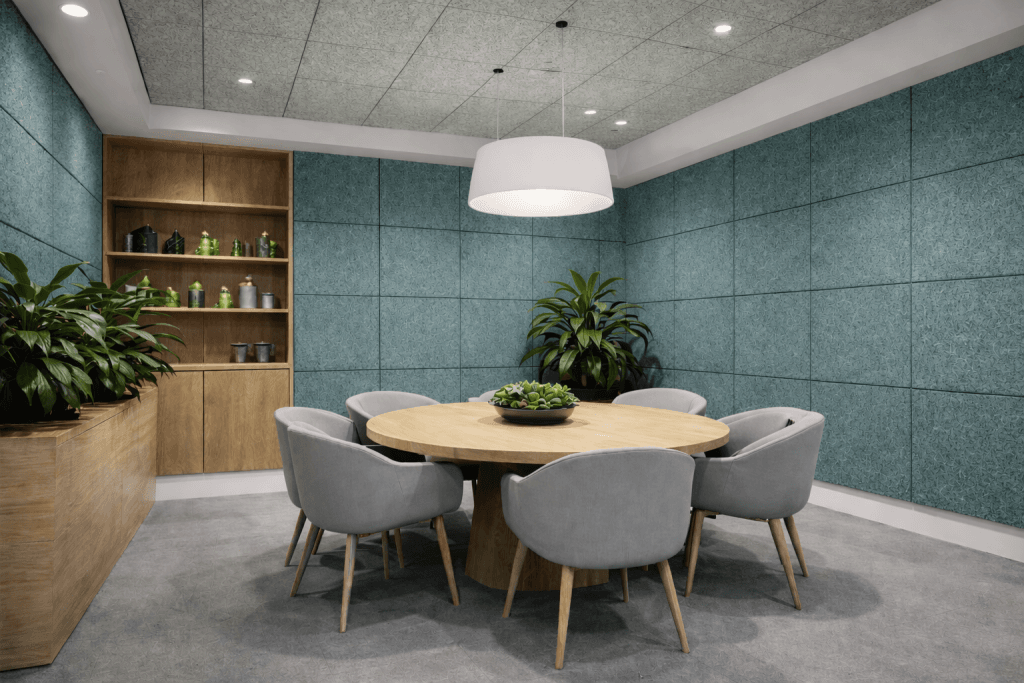
Acoustic conditions play a critical role in the functionality and wellbeing of contemporary office environments. Open-plan layouts, collaborative zones, and hybrid working models have intensified the challenge of controlling noise while maintaining flexibility and visual openness. Interior cladding strategies that incorporate wood wool acoustic panels offer a performance-led response, combining effective sound absorption with durability, fire safety, and material transparency suited to modern workplace requirements.
Acoustic Challenges in Contemporary Office Interiors
Speech Privacy and Distraction Control
In open-plan offices, uncontrolled speech noise is one of the primary sources of distraction, reducing concentration and task performance. Excessive reverberation amplifies conversational noise and increases speech intelligibility beyond intended zones. Wood wool acoustic panels, when used as interior wall or ceiling cladding, provide broadband sound absorption that reduces reflected speech energy, helping to improve acoustic separation between work areas and support speech privacy without relying solely on partitions¹.
Reverberation Management in Open-Plan Layouts
Open-plan offices typically feature hard surfaces such as glazing, exposed concrete, and raised access floors, all of which contribute to prolonged reverberation times. Wood wool interior cladding mitigates this effect by introducing porous absorption across large surface areas. When specified using performance data aligned with room volume and occupancy, these panels help achieve reverberation targets recommended for office environments, improving overall acoustic comfort and reducing noise fatigue².
Balancing Collaboration and Focus Zones
Modern offices require a balance between collaborative interaction and focused individual work. Acoustic zoning strategies use variations in surface treatment to differentiate spaces acoustically without physical separation. Wood wool panels enable this approach by allowing selective application on walls or ceilings, supporting quieter focus areas while maintaining livelier acoustic conditions in collaboration zones.
Design Integration of Wood Wool Interior Cladding
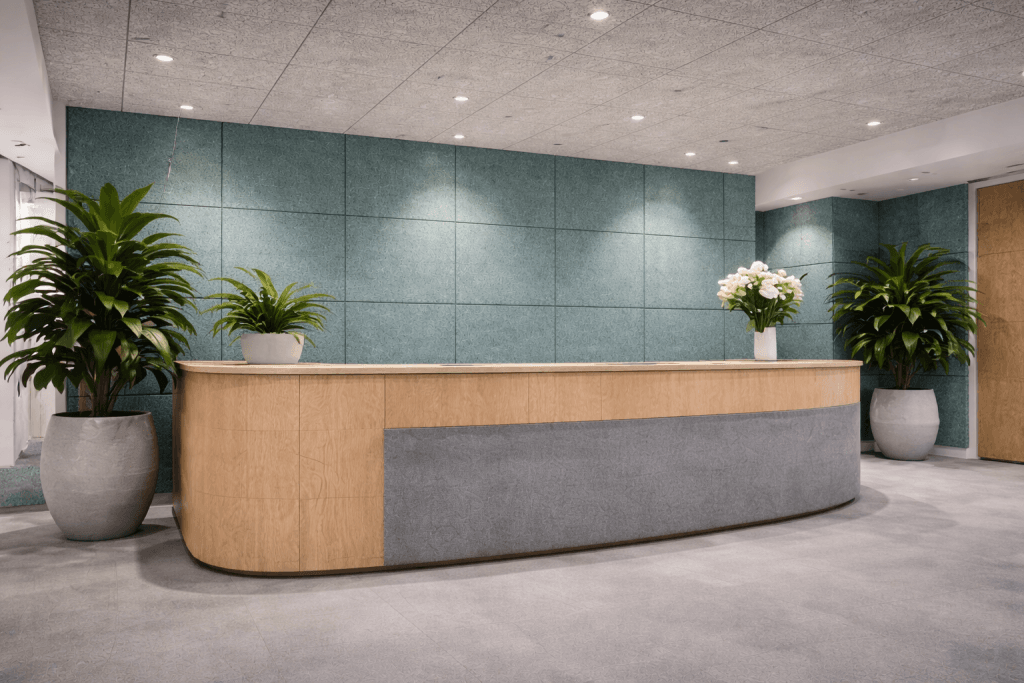
Wood wool acoustic panels offer predictable acoustic behaviour when tested under standardised conditions, allowing designers to integrate them confidently into office interiors. Their compatibility with both wall and ceiling applications enables absorption to be distributed according to room geometry and use patterns. As an interior cladding solution, wood wool supports performance-led design by aligning material selection with acoustic targets rather than relying on uniform surface treatment or post-occupancy remediation.

Performance-Based Specification Strategies
Panel Placement and Surface Coverage
Effective acoustic performance depends on strategic placement rather than total coverage alone. In office settings, wall-mounted wood wool panels positioned along circulation routes and workstation perimeters reduce lateral sound reflections that contribute to distraction. Ceiling-mounted systems address vertical reflections and overall reverberation. Combining these approaches allows designers to achieve consistent acoustic conditions while minimising material use and preserving design flexibility³.
Predictable Modelling and Regulatory Alignment
Wood wool acoustic panels are supported by laboratory test data derived from recognised acoustic standards, enabling reliable performance modelling during design. This predictability reduces uncertainty at specification stage and lowers the risk of non-compliance after installation. Performance-based specification also supports alignment with workplace acoustic guidelines and building assessment frameworks, reinforcing confidence in acoustic outcomes.
Material Performance Beyond Acoustics
Durability and Fire Safety in Commercial Interiors
Office interiors demand materials capable of withstanding frequent contact, reconfiguration, and long service life. Wood wool panels are mechanically robust compared to softer acoustic treatments, making them suitable for high-traffic areas. Their mineral-bonded composition supports fire performance classifications under EN 13501-1, contributing to compliant interior cladding strategies in commercial buildings⁴.
Indoor Air Quality and Occupational Health
Indoor air quality is increasingly recognised as a contributor to employee wellbeing and productivity. Wood wool acoustic panels manufactured with low-emission binders help limit volatile organic compound emissions, supporting healthier work environments. Their use aligns with indoor environmental quality criteria applied in office buildings and corporate sustainability policies⁵.

Supporting Productive and Adaptable Office Environments
Interior cladding strategies using wood wool acoustic panels provide a comprehensive response to the acoustic demands of modern office environments. By reducing speech noise, controlling reverberation, and enabling acoustic zoning, wood wool systems support both focused work and collaboration within flexible layouts. Their durability, fire safety performance, and low-emission composition align acoustic comfort with health, safety, and sustainability priorities. When specified using performance data and integrated thoughtfully into interior design, wood wool acoustic panels become a foundational element in creating productive, adaptable, and resilient office environments that can evolve alongside changing workplace needs and organisational models⁶.
References
International Organization for Standardization. (2008). ISO 3382-1: Acoustics — Measurement of Room Acoustic Parameters — Performance Spaces. ISO.
Kuttruff, H. (2017). Room Acoustics (6th ed.). CRC Press.
Cox, T. J., & D’Antonio, P. (2016). Acoustic Absorbers and Diffusers: Theory, Design and Application. CRC Press.
ASTM International. (2022). ASTM C423-22: Standard Test Method for Sound Absorption and Sound Absorption Coefficients by the Reverberation Room Method. ASTM International.
U.S. Green Building Council. (2020). LEED v4.1 Building Design and Construction Reference Guide. USGBC.
EPD International AB. (2019). General Programme Instructions for the International EPD® System. EPD International.
Share