Acoustic Comfort and Health-Centred Building Design
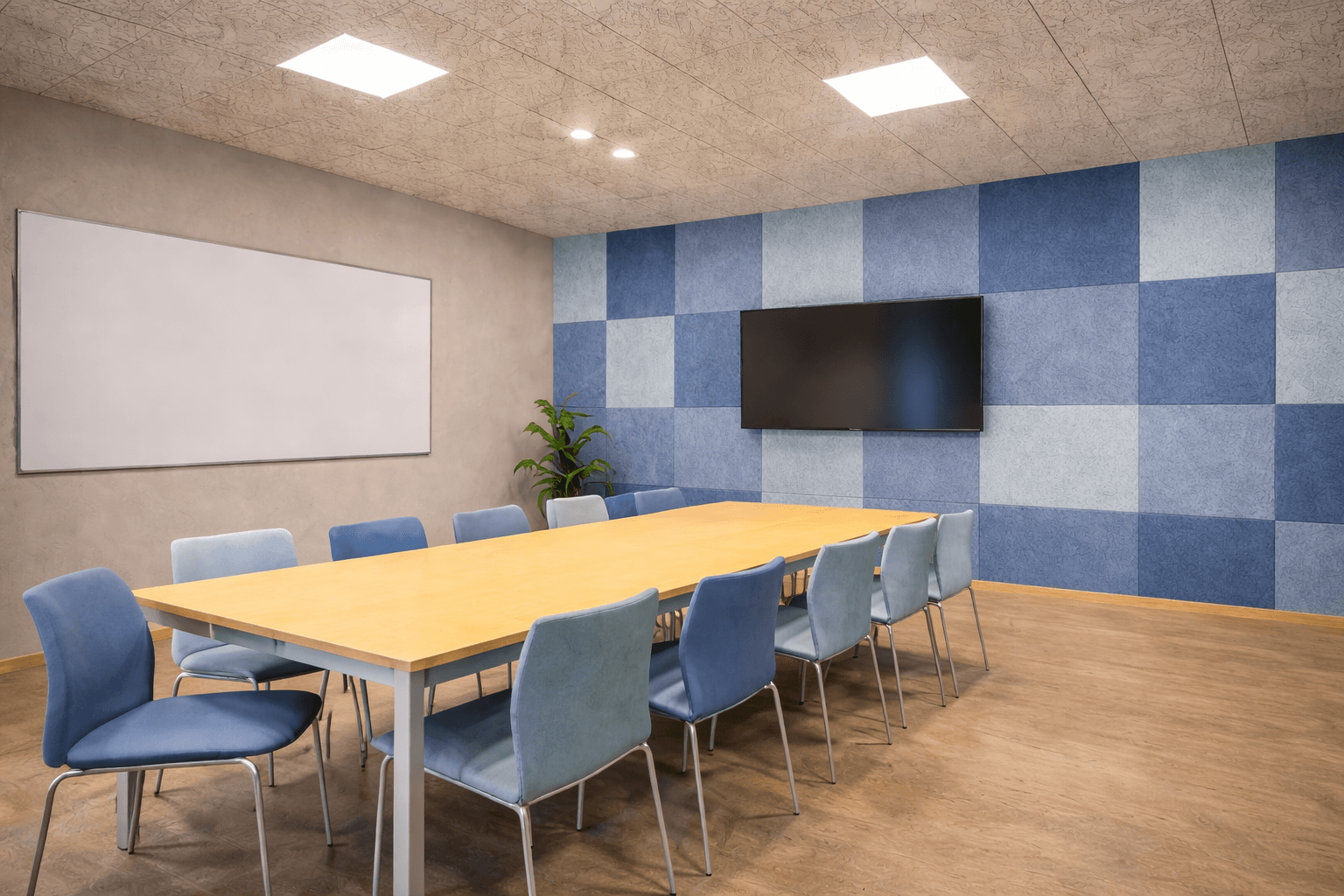
The WELL Building Standard has reframed how architects and consultants evaluate interior environments by prioritising human health, comfort, and wellbeing alongside energy and environmental performance. Within this framework, acoustic quality is closely linked to cognitive function, stress reduction, and occupant satisfaction. Wood wool acoustic panels have become increasingly relevant in WELL projects due to their ability to manage sound, support healthy indoor air quality, and align with material transparency and sustainability criteria.
WELL Building Standard Requirements Relevant to Acoustics
Sound, Mental Wellbeing, and Cognitive Performance
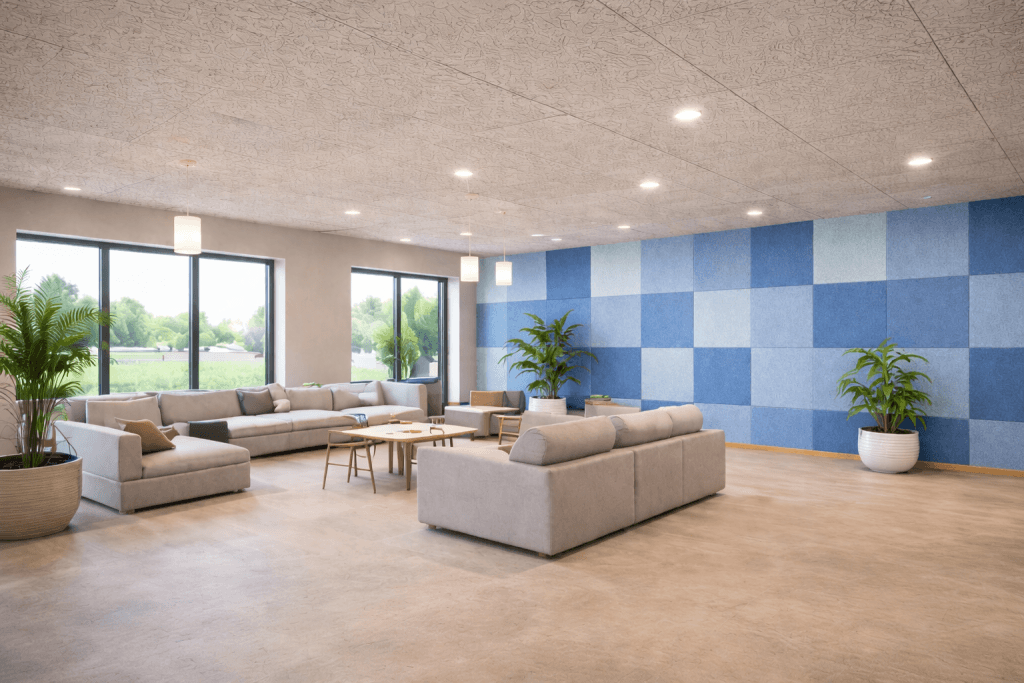
The WELL Building Standard recognises sound as a critical environmental parameter influencing mental health and productivity. Excessive reverberation and background noise are associated with reduced concentration and increased stress, particularly in workplaces and educational settings¹. Wood wool acoustic panels contribute to compliance with WELL Sound features by reducing reverberation time and improving speech clarity, creating calmer and more intelligible interior environments.
Indoor Air Quality and Low-Emitting Materials
Material emissions play a central role in WELL’s Air concept, which emphasises the reduction of volatile organic compounds (VOCs) and airborne contaminants. Wood wool panels, composed primarily of mineral-bound wood fibres, typically exhibit low VOC emissions when manufactured with compliant binders and finishes². Their use supports healthier indoor air quality while providing acoustic absorption without reliance on synthetic foams or high-emission composites.
Material Transparency and Health Disclosure
WELL encourages transparency around material composition to minimise exposure to harmful substances. Documentation such as Health Product Declarations (HPDs) and Declare labels enables project teams to verify that materials are free from substances of concern. Wood wool panels with disclosed ingredients and Red List Free declarations align with WELL’s precautionary approach to material health, particularly in large-scale interior applications.
Performance Alignment Between Acoustics and WELL Outcomes
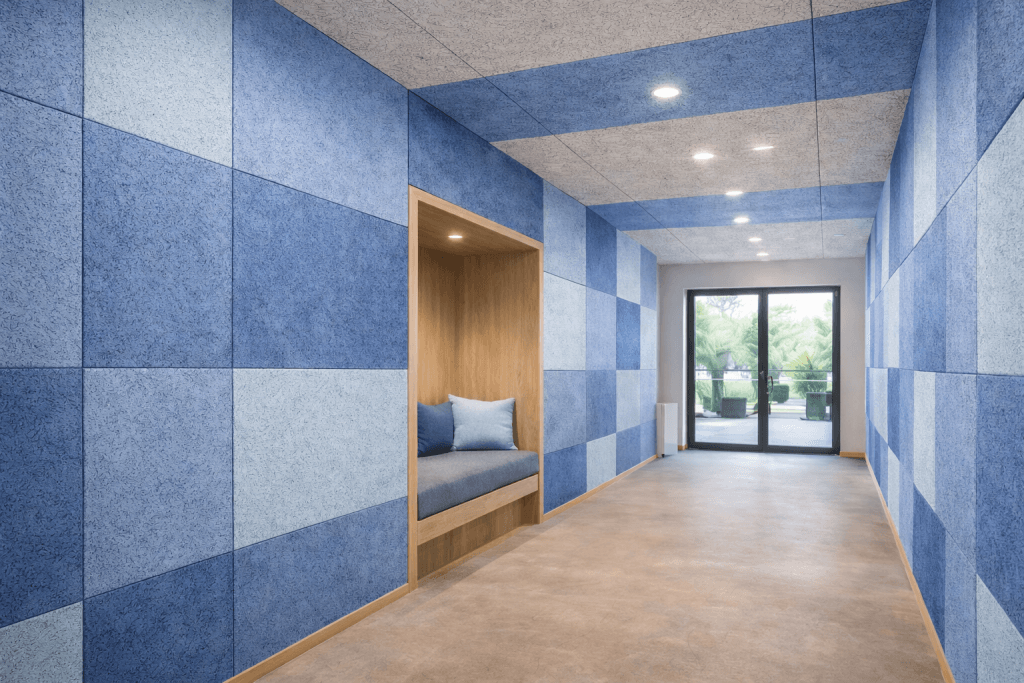
Integrating wood wool acoustic panels into WELL projects requires alignment between measurable acoustic performance and broader wellbeing objectives. Acoustic absorption coefficients, typically measured under ISO 354, provide quantifiable evidence of a panel’s effectiveness³. When combined with thoughtful placement and backing strategies, wood wool systems can be tuned to achieve target reverberation times that support WELL Sound criteria while maintaining visual and material continuity.

Specification Strategies for WELL-Focused Projects
Balancing Acoustic Absorption and Visual Comfort
WELL places emphasis not only on measurable performance but also on perceived comfort. Wood wool panels offer a textured, natural surface that reduces visual glare and contributes to biophilic design strategies. This visual softness complements their acoustic function, supporting environments that feel calmer and more comfortable without appearing overtly technical or institutional.
Coordination with Other WELL Concepts
Acoustic materials in WELL projects rarely operate in isolation. Wood wool panels often intersect with WELL concepts related to Light, Comfort, and Mind. For example, integrating panels with daylighting strategies or curved ceilings can enhance both acoustic diffusion and spatial experience. Early-stage coordination ensures that acoustic treatments reinforce, rather than compromise, other health-focused design objectives.
Flooring and Stage Design
While WELL focuses on occupant health, it increasingly intersects with sustainability metrics that influence long-term environmental quality. Environmental Product Declarations (EPDs) provide lifecycle data on wood wool panels, including embodied carbon and resource use⁴. Specifying products with verified EPDs supports responsible material selection while complementing WELL’s emphasis on transparency and evidence-based decision-making.
Responsible Sourcing and Low-Risk Material Choices
Wood wool panels manufactured with FSC® Chain of Custody certified fibres support responsible forestry and reduce upstream environmental risk. Combined with low-emission binders, this sourcing strategy aligns with WELL’s intent to reduce cumulative health impacts across the material lifecycle. Durable acoustic materials also minimise replacement frequency, indirectly supporting healthier buildings through reduced disruption and waste.
Designing Healthier Acoustic Environments with Wood Wool
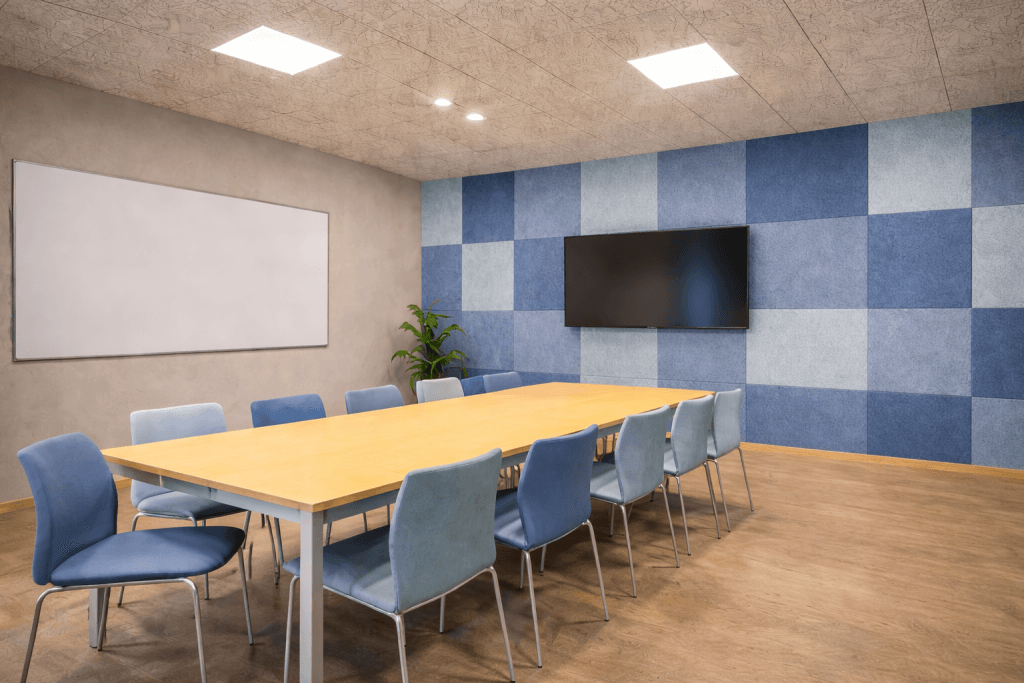
The integration of wood wool acoustic panels into WELL Building Standard projects illustrates how material performance, health, and sustainability can be addressed holistically. By supporting acoustic comfort, low-emission interiors, and material transparency, wood wool systems contribute meaningfully to environments that prioritise human wellbeing. Their adaptability across ceilings and walls allows designers to fine-tune acoustic conditions without introducing materials that may compromise air quality or visual comfort. As the WELL framework continues to evolve, the role of acoustics in supporting mental health and productivity is likely to strengthen, positioning wood wool acoustic panels as a practical and evidence-based solution. When specified with appropriate documentation and performance data, these panels enable project teams to translate WELL principles into tangible spatial outcomes that benefit occupants over the full lifecycle of the building⁵.
References
International WELL Building Institute (2023). WELL Building Standard v2. IWBI
International Organization for Standardization (2006). ISO 16000-9:2024 Indoor air — Determination of the emission of volatile organic compounds.
International Organization for Standardization. (2003). ISO 10534-2:2023 Acoustics — Measurement of sound absorption in a reverberation room.
European Committee for Standardization (2012). Sustainability of construction works — Environmental product declarations.
World Health Organization. (2018). Environmental Noise Guidelines for the European Region. WHO Regional Office for Europe
Share