
Designing Complex Geometry in Contemporary Acoustic Architecture
Curved interior cladding and patterned wood wool acoustic panels are increasingly specified in contemporary architecture to address both spatial acoustics and experiential quality. Advances in computational modelling, parametric design, and data-driven optimisation have expanded the formal possibilities of wood wool systems, enabling designers to move beyond planar ceilings and walls. These developments allow complex geometries to be rationalised for performance, constructability, and sustainability while maintaining compliance with acoustic, fire, and environmental standards.

Wood Wool Panels as a Geometric Acoustic Medium
Material Anisotropy and Form Responsiveness
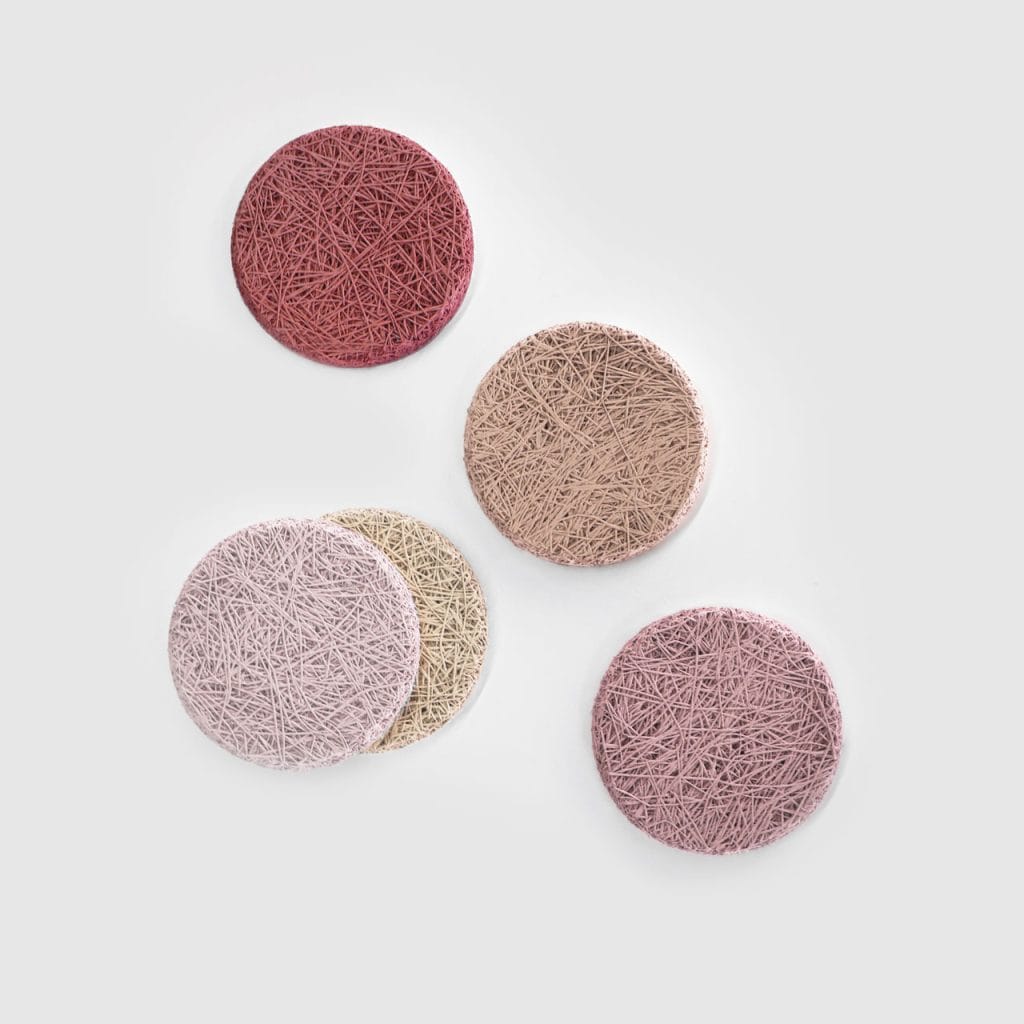
Wood wool panels exhibit anisotropic behaviour due to the orientation of wood fibres bound within a mineral or cementitious matrix. This fibre orientation influences sound absorption, particularly at mid-to-high frequencies, and interacts with surface geometry to affect scattering and diffusion. When panels are curved or patterned, local changes in angle and depth alter sound incidence, enabling designers to tune acoustic response spatially rather than relying solely on uniform absorption values¹.
Curvature, Depth Variation, and Sound Interaction
Curved interior cladding introduces controlled variability in panel depth and orientation, which affects reflection paths and reverberation distribution. Convex geometries tend to promote sound diffusion, while concave forms can concentrate reflections if not carefully designed. Wood wool panels, when used with calculated curvature radii and backing cavities, can mitigate these risks by combining absorption with geometric scattering, improving speech clarity and spatial uniformity in large interiors².
Patterned Surfaces and Visual–Acoustic Integration
Patterning through ribbing, perforation, or modular relief adds a secondary layer of acoustic control. Repeating geometries create predictable acoustic behaviour, while graded or non-uniform patterns allow zoning within a single surface. In wood wool systems, patterning also reinforces visual texture, aligning biophilic design intent with measurable acoustic outcomes without introducing additional material layers.
Data-Driven Optimisation in Acoustic Geometry Design
The integration of data-driven workflows has transformed how complex wood wool geometries are developed and evaluated. Acoustic simulation software, coupled with parametric modelling environments, allows designers to iterate forms based on predicted reverberation time, clarity indices, and spatial decay rates. These tools reduce reliance on empirical approximation, enabling early-stage optimisation that aligns geometry, material density, and backing conditions with target performance metrics³.

Parametric Modelling and Performance Feedback Loops
Algorithmic Control of Geometry
Parametric design platforms enable curvature, panel size, joint spacing, and pattern density to be controlled through adjustable parameters. This approach allows designers to explore a wide design space efficiently, testing variations against acoustic simulations. For wood wool panels, parameters such as fibre density, panel thickness, and air-gap depth can be linked directly to performance data, creating a responsive design system rather than a static specification.
Simulation-Based Acoustic Validation
Acoustic simulation tools, including ray-tracing and wave-based models, provide feedback on how complex geometries influence sound behaviour. By integrating these tools into the parametric workflow, designers can identify problematic focal points or insufficient absorption zones early in the design process. This iterative validation reduces the risk of post-installation corrective measures and supports evidence-based acoustic design strategies⁴
Environmental Product Declarations and Optimised Material Use
Complex geometry does not inherently conflict with sustainability objectives when supported by transparent environmental data. Environmental Product Declarations (EPDs) allow designers to assess the life-cycle impacts of wood wool panels, including raw material extraction, manufacturing, and end-of-life scenarios⁵. Data-driven optimisation can reduce material usage by aligning panel thickness and density precisely with acoustic requirements rather than over-specifying.
Health, Low VOC, and Responsible Sourcing
Wood wool panels are frequently specified for their low VOC emissions and compatibility with health-focused standards such as LEED and WELL. When combined with FSC® Chain of Custody certified wood fibres and Declare Red List Free binders, these systems support healthier interiors even in geometrically complex applications⁶. Data-driven design ensures that performance-driven geometry does not compromise compliance with health and sustainability certifications.

Future Directions in Optimised Acoustic Geometry
The convergence of advanced simulation, parametric design, and sustainability frameworks is reshaping how wood wool acoustic panels are specified and detailed. As machine learning techniques are increasingly applied to acoustic prediction models, future workflows may automate geometry optimisation based on large datasets of measured performance. This evolution positions curved and patterned wood wool cladding as a high-performance, low-impact solution for acoustically demanding interiors, balancing expressive design with quantifiable outcomes⁷.
References
International Organisation for Standardization (2003). ISO 354:2003 Acoustics — Measurement of sound absorption in a reverberation room.
Everest, F. A., & Pohlmann, K. C. (2015). The Master Handbook of Acoustics. McGraw-Hill Education.
Cox, T.J, & D’Antonio, P. (2016). Acoustic Absorbers and Diffusers: theory, Design and Application. CRC Press.
Long, M. (2014). Architectural Acoustics. Elsevier Academic Press.
European Committee for Standardization (2026). Environmental Product Declarations.
U.S. Green Building Council (2023). LEED v4.1 Building Design and Construction.
- Kang, J., & Schutle-Fortkamp, B. (2016) Soundscape and the Built Environment, CRC Press.
Share